
Driveway and Garage Lighting
Driveway and garage lighting
Bright, reliable light for arriving home, parking safely and keeping the front of the property clear after dark.
A driveway needs light at exactly the right moment
Large, open and exposed to the weather, driveways and garages ask more of a light than almost any other part of the home.
- Instant arrival light. A sensor that switches on as you drive or walk in means no fumbling with keys, bags or the garage door.
- Wide coverage. The light has to reach the car, the boot, the garage door and the path to the house.
- Enough output. Bigger areas generally need higher light output, so compare lumens rather than watts alone.
- Toughness. Wall lights near garage doors and walkways can get knocked. Look for impact-resistant housings and diffusers.
Three zones, three jobs
Driveway and approach
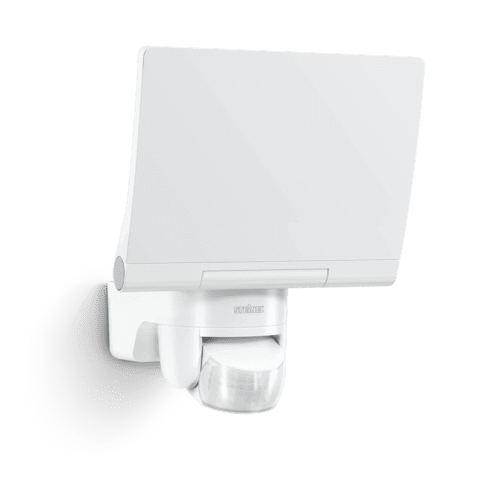
A wide-angle floodlight mounted above the garage or on the corner of the house covers the whole forecourt in one sweep.
Garage door and parking
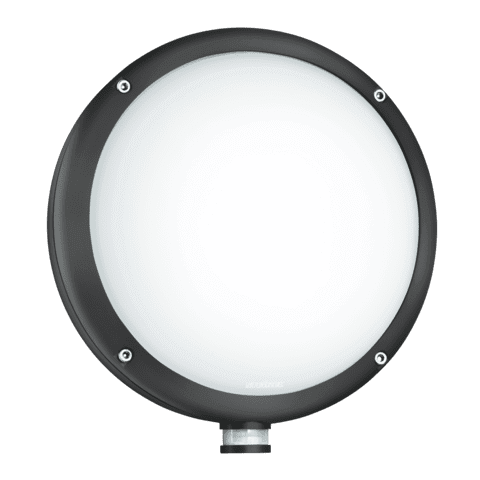
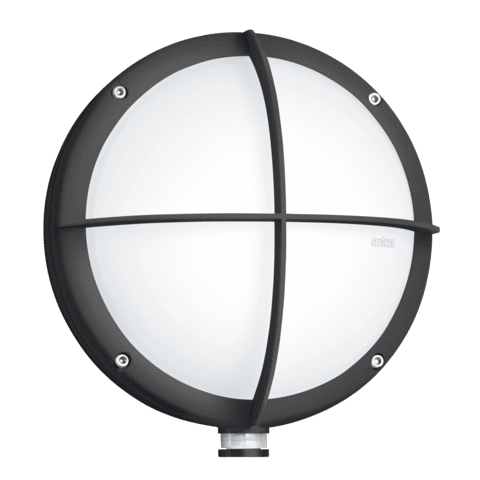
An impact-resistant wall light beside the door, or a ceiling sensor inside a carport, lights the area you actually work in.
Side access and bins
A compact sensor wall light keeps the side gate and bin area safe without lighting up the neighbours.
Choose by lumens, angle and range
Lumens measure how much light a fitting produces. The sensor’s detection angle and range decide how much of the space it watches. Product pages list both, so you can compare like for like.
Position matters as much as power. Mount the light high enough to cover the area, and angle the sensor so that movement crosses its field of view. Infrared sensors generally pick up crossing movement more readily than movement heading straight at them.
Avoid false triggers: keep the sensor from facing the street, swaying trees or heat sources such as exhausts and air conditioners. Where a model allows, reduce the range or sensitivity.
Matching the light to the space
| Space | What to look for | Example |
|---|---|---|
| Wide driveway or forecourt | High output, wide sensor angle, long range | XLED Pro Square XL S: 47 W, 4367 lm, 240° sensor, up to 12 m |
| Single driveway | Mid-range floodlight with an adjustable panel | XLED Home 2 XL S: 19.3 W, 2124 lm, 180° sensor, 10 m reach |
| Parking bay beside a wall | Wide-angle wall floodlight | LS 150: 14.7 W, 1486 lm, 240° sensor, 12 m |
| Garage door, stairs, carport wall | Impact-resistant wall light | L 330 and L 331 S with IK10 impact-resistant diffusers |
Specifications are taken from the manufacturer’s product listings. Always confirm the details on the product page before you buy.
Floodlights and wall lights for driveways





Driveway lighting FAQs
How bright should a driveway light be?
It depends on the size of the area and how high the light is mounted. As a guide, a wide forecourt suits a high-output floodlight, while a single driveway is well served by a mid-range model. Lumen output is listed on each product page.
Will passing cars set the light off?
They can if the sensor faces the street. Aim the sensor across the driveway rather than towards the road, and reduce the range or sensitivity where the product allows it.
Can I link several lights together?
Bluetooth Mesh models can be set up and grouped using the STEINEL Connect app. Check the product page to confirm that a model supports it.
Do I need an electrician?
Yes for mains-powered lights. Fixed wiring must be installed by a licensed electrician in Australia.
Related guides
Building or specifying a project?
Talk to our team about trade pricing and product selection for builders, designers and electricians.